
The most productive place to find shark teeth in Charleston is Morris Island — an undeveloped, boat-access-only barrier island where fossilized megalodon, mako, tiger, and sand tiger teeth wash up with every tide. Folly Beach and Sullivan's Island produce teeth too, but Morris Island's lack of road access keeps it far less picked-over. Here's every spot, the best tide, the gear, and what's legal.
Charleston sits on one of the richest fossil coastlines in the world. Beneath the Lowcountry's rivers and seabed lie the Oligocene beds that produce most of this material — the Ashley Formation at roughly 28 to 29 million years and the Chandler Bridge Formation above it at about 24 to 23 million years — with younger Miocene, Pliocene and Pleistocene material reworked on top, including the megalodon teeth everyone comes for. Every tide stirs these fossils loose and scatters them along local beaches and sandbars. Here's exactly where to find them.
1. Morris Island — The #1 Spot (Boat Access Only)
Morris Island is an uninhabited barrier island just south of Charleston Harbor, reachable only by boat. With no bridge, road, or parking lot, it sees a fraction of the foot traffic of the public beaches — so the teeth aren't picked over. The northern end, near the historic lighthouse, is where the harbor's current concentrates shells, fossils, and teeth.
- No road access means far less competition for finds
- A strong tidal current constantly delivers fresh teeth
- Megalodon, mako, tiger, and sand tiger teeth are all common
- Sand dollars, whelks, and dolphin sightings on the ride out
The catch: you need a boat. Most visitors reach Morris Island on a guided shark tooth hunting tour out of Shem Creek, which handles the navigation, drops you on the best stretch of beach at the right tide, and teaches you what to look for.
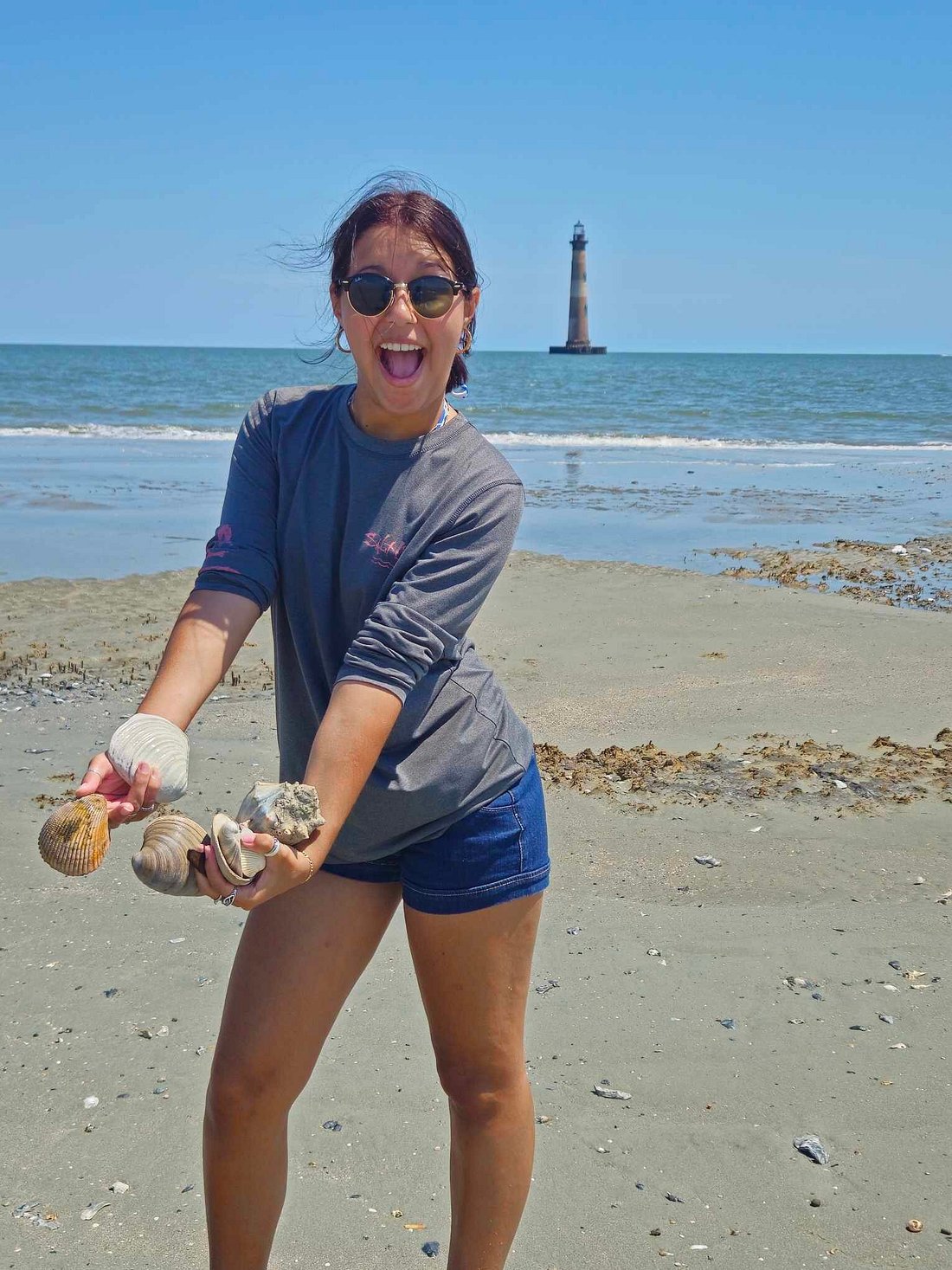
2. Folly Beach and 'The Washout'
Folly Beach is the most accessible place to find shark teeth in Charleston — you can drive right to it. The far northeast end, known locally as 'the Washout,' and the southern tip near the Folly River inlet are the most productive. Search the gravel and shell beds at low tide. Folly is busy, so you'll work harder for each tooth than on Morris Island, but it's free and family-friendly.
3. Other Charleston-Area Spots Worth Knowing
- Sullivan's Island — quieter than Folly; check the shell piles near the jetties
- Edisto Beach — about an hour south, with well-known fossil beds nearby
- Wando and Stono Rivers — divers recover large megalodon teeth from the bottoms (advanced; know the rules first)
- Harbor sandbars — exposed at low tide and a hidden local favorite
Best Time and Tide to Hunt
Timing matters more than location. The best time to find shark teeth in Charleston is the two hours around low tide, which exposes the gravel and shell-hash beds where teeth settle. A falling tide a day or two after a storm or strong wind is ideal — rough water churns up fresh material from offshore. Winter and early spring can be especially productive: fewer crowds and bigger swells.
- Go within about 2 hours of low tide
- A day or two after a storm or front is best
- Early morning beats the crowds to fresh teeth
- It's a year-round activity, not seasonal
What You'll Actually Find
Most teeth are small — a quarter-inch to an inch — and dark gray, black, or tan from millions of years in the sediment. Look for glossy, triangular shapes that stand out against the dull beige shell hash. Common finds include sand tiger (slender, smooth), tiger (curved and serrated), mako (smooth and dagger-like), and the occasional small megalodon.
Gear: What to Bring
- A small mesh bag or jar for your finds
- Sunscreen, water, and a hat — little shade on the islands
- Closed-toe water shoes; oyster shells are sharp
- Optional: a kitchen strainer or small scoop for sifting shell beds
Is It Legal to Keep Shark Teeth?
Yes. Surface-collecting fossilized shark teeth from South Carolina beaches for personal use is legal — you keep what you find. The key rule is that it's beachcombing only: digging into the riverbed or bank is not allowed, and a South Carolina Hobby Diver License is required to collect fossils from state river bottoms. On a guided Morris Island beach hunt you're simply surface-combing, so everything you pick up is yours to keep.
Guided Tour vs. Going It Alone
If you have a boat and know the tides, Morris Island is yours. If you don't — or you want the best odds of a good haul — a guided shark tooth hunting tour is the shortcut. Our 4-hour Morris Island trips out of Shem Creek run on the right tide, put you on the most productive stretch, and send everyone home with teeth. It's the most reliable way to find megalodon and fossil teeth around Charleston.
Pricing, BYOB rules, weather policy, and departure details are all on our FAQ page — or call (843) 874-8555.
Frequently Asked
Where is the best place to find shark teeth in Charleston?
Morris Island, a boat-access-only barrier island just south of Charleston Harbor. Because it has no road access, the teeth aren't picked over, and the harbor's current delivers fresh megalodon, mako, tiger, and sand tiger teeth with every tide.
Can you find megalodon teeth in Charleston?
Yes. Megalodon teeth turn up regularly around Charleston, especially on Morris Island and in the Wando, Stono, and Cooper river bottoms. Most beach finds are small or partial; large complete megalodon teeth are usually recovered by divers in the rivers.
Do you need a license to collect shark teeth in Charleston?
No license is needed to surface-collect fossilized teeth from the beach for personal use. A South Carolina Hobby Diver License is required only to collect fossils from state river bottoms.
When is the best time to find shark teeth?
Within about two hours of low tide, ideally a day or two after a storm or strong wind. Early morning means fewer people and fresh teeth.
Can you find shark teeth at Folly Beach?
Yes — the northeast 'Washout' and the southern inlet near the Folly River are the most productive spots. Folly is busier than Morris Island, so expect more competition.
Is shark tooth hunting good for kids?
It's one of the best family activities in Charleston. The teeth are easy to spot once you know what to look for, and the captain helps everyone find their first one.
How do I get to Morris Island?
Only by boat — there's no bridge or road. Most people go on a guided shark tooth hunting tour from Shem Creek in Mount Pleasant, which handles the navigation and tides.
Local captain with LowCountry Coastal Excursions, running tours out of Shem Creek since 2017.