
For a Charleston sunset cruise, October is my pick: highs average 76°F and the boat leaves Shem Creek between 4:30 and 5:00 PM. Summer has the latest sunsets, about 8:32 PM in late June, and the most rain. By early December the sun sets around 5:13 PM and highs average about 61°F.
If you asked me to pick one month, I'd say October. Highs still average 76°F, the boat leaves between 4:30 and 5:00 PM, and you're back at Shem Creek around 7 with the whole night ahead of you. September runs a close second, warmer and wetter. High summer gives you the latest sunsets of the year and the most rain. Winter is short, cool and early.
You may weigh it differently, and that's fine. Heat bothers some people more than early dark does. So here are the sunset times and the weather for every month, and you can argue with my pick.
Sunset moves more than three hours across the year
The earliest sunset of 2026 in Charleston comes on November 30 and December 1, at 5:13 PM. The latest comes on June 30 and July 1, at 8:32 PM. Daylight saving time accounts for an hour of that swing (clocks went forward on March 8 and back on November 1), and the sun does the rest. I pulled the sunset times from the U.S. Naval Observatory's sun and moon data service, run for the coordinates of Shem Creek on the first and last day of each month.
One thing to keep straight. The sunset column is when the sun goes down. Our departure column is when the boat leaves, and we only publish those windows for August through November. For any other month, the booking calendar shows the exact time for your date, and I won't guess at it here.
| Month | Sunset in Charleston, 2026 (1st to last day) | Our departure window | Average high / low | What to wear on the water |
|---|---|---|---|---|
| January | 5:24 to 5:51 PM | Check the calendar | 58°F / 44°F | Warm jacket, hat, gloves for the ride home |
| February | 5:52 to 6:16 PM | Check the calendar | 60°F / 46°F | Warm jacket and a hat |
| March | 6:17 to 7:39 PM (clocks change March 8) | Check the calendar | 66°F / 52°F | Fleece or a windproof jacket |
| April | 7:40 to 8:01 PM | Check the calendar | 72°F / 60°F | Light jacket for after sunset |
| May | 8:01 to 8:22 PM | Check the calendar | 79°F / 68°F | A light layer and sunglasses |
| June | 8:23 to 8:32 PM | Check the calendar | 84°F / 74°F | Light clothes, sunglasses, sunscreen |
| July | 8:32 to 8:19 PM | Check the calendar | 88°F / 77°F | Light clothes, sunglasses, sunscreen |
| August | 8:18 to 7:45 PM | 5:45 to 6:15 PM | 86°F / 77°F | Light clothes and sunglasses |
| September | 7:44 to 7:05 PM | 5:00 to 5:45 PM | 83°F / 73°F | A light layer for the ride back |
| October | 7:04 to 6:29 PM | 4:30 to 5:00 PM | 76°F / 63°F | Long sleeves and a light jacket |
| November | 5:28 to 5:13 PM (clocks change November 1) | 4:30 PM | 67°F / 53°F | A real jacket. Dusk on the water is cold |
| December | 5:13 to 5:23 PM | Check the calendar | 61°F / 47°F | Winter coat, hat and gloves |
The highs and lows are NOAA's 1991–2020 climate normals for the downtown Charleston weather station (USW00013782), rounded to the nearest degree. They're land numbers, taken in town. Our own rule of thumb on the boat is that it cools about 10°F on the water at dusk. Dress for the low column, not the high one, from October on.
The boat doesn't leave a fixed time before sunset
Lay our departure windows next to the sunset column and the gap changes through the fall. In August the published window is 5:45 to 6:15 PM against a sunset between 7:45 and 8:18, so the two hours on the water are golden hour and the boat comes back to the dock right around sundown. September and October work the same way. November is different. We leave at 4:30 with the sun going down between 5:13 and 5:28, so the sunset and the glow after it happen in the middle of the cruise, and you ride home up the creek in the dark.
Neither one is better. They're different evenings. If you want the long warm light on the bridge, come in late summer. If you want to see the sky go through all its colors from the water, November gives you that.
Color comes late, so stay on deck
NOAA's SciJinks explainer on why sunsets turn red puts it simply: as the sun drops, its light passes through more of the atmosphere, so more of the blue gets scattered away and the reds and yellows come through. Larger particles of dust, pollution and water vapor scatter even more of the reds and yellows, which can light up the whole western sky. On a muggy Lowcountry evening there's plenty of water vapor to work with.
Clouds help too. Partly cloudy skies often make the most dramatic sunsets, because the undersides of the clouds catch color the clear sky can't. A forecast that says partly cloudy is good news for this cruise.
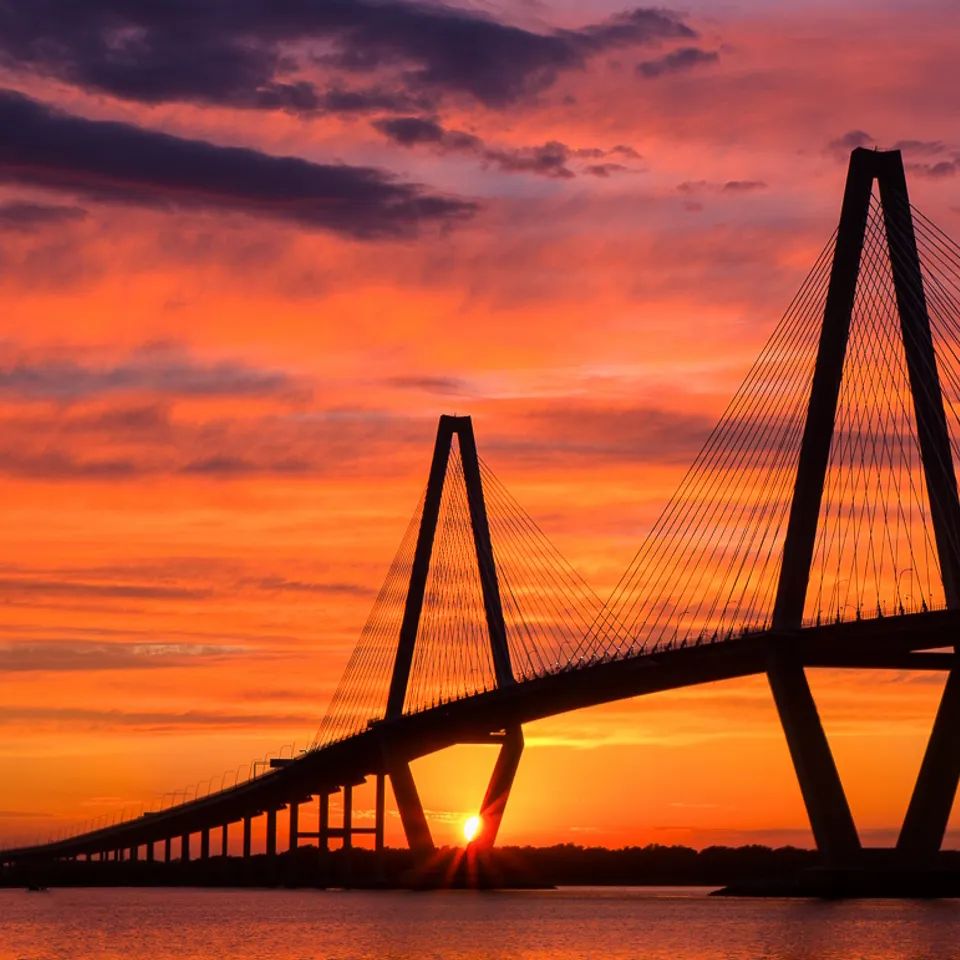
The light also lasts longer than people expect. In the Naval Observatory's tables, civil twilight ends 24 to 28 minutes after sunset at Shem Creek on every date I checked, January through December. That half hour is when the sky does its best work, and it's why I'd tell anyone to keep the phone out after the sun is gone.
What the weather does in each season
Summer is hot and wet. July is the peak, with an average high of 88°F and an average low of 77°F. June, July and August each average close to 5 inches of rain or more, August the most. I won't pretend the heat doesn't matter on a boat. It does. You get the latest light of the year in exchange, and the sun is still high enough on the run out that sunglasses and sunscreen earn their place.
Fall is where I'd spend my own evenings. September is still summer in everything but name: 83°F on average and 5.25 inches of rain, second only to August. Then October drops to 76°F and about 4 inches. November is cooler again, 67°F, and the driest month on the chart.
Winter is short and cool. December through February the averages run from 58 to 61°F for highs and 44 to 47°F for lows, and on a moving boat at dusk it feels colder than that. Dress like you're going to a night football game. Spring climbs fast: 66°F in March, 72°F in April, 79°F in May.
"August averages 6.11 inches of rain in downtown Charleston, the wettest month of the year. November averages 2.30 inches, the driest."— NOAA NCEI, U.S. Climate Normals 1991–2020, station USW00013782
A rainy forecast won't cancel the trip on its own. We go out rain or shine. If the weather turns unsafe, I cancel, and you pick a full refund or a free reschedule.
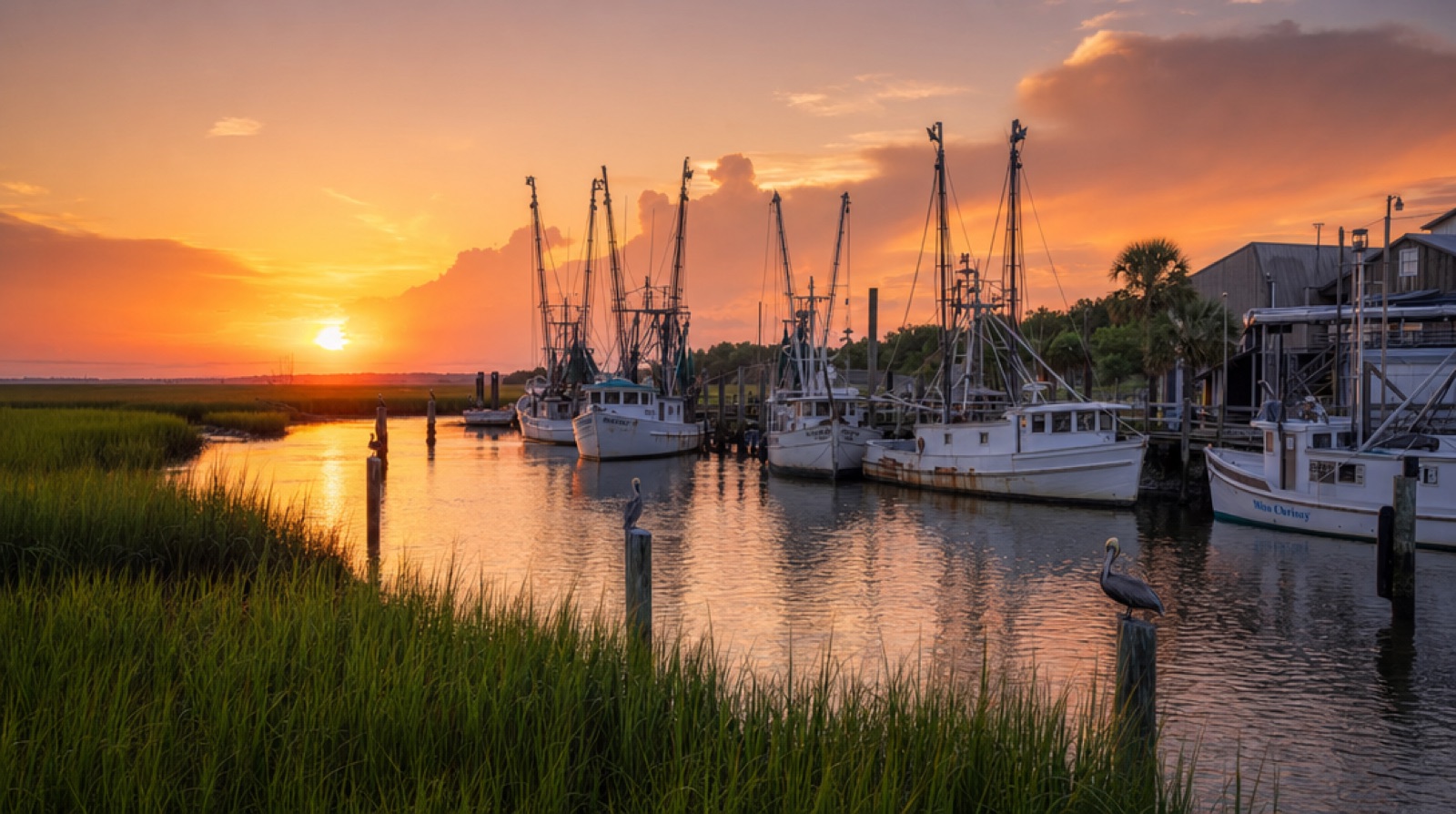
How I'd choose a month
- For warm air and the latest light, June and July. Sunset comes at 8:19 PM or later every day. Plan around heat and the summer rain.
- For the best balance, October. Mid-70s highs, a 4:30 to 5:00 PM departure, and home by about 7.
- For the full sunset and twilight from the water, November. The 4:30 boat is out for all of it, so bring a real jacket.
- For an empty calendar and crisp air, December through February. Check the booking calendar for times and dress warmer than you think.
If you've got kids along, the early fall departures are the easy ones for bedtimes. Couples planning something around a particular sunset should book the date first and work backward from the calendar's departure time.
Booking your date
Seats are $59 per person and $49 for kids 12 and under, plus 3% at checkout, for about two hours aboard the Roamer IV. Pick your date on the sunset cruise page and the calendar shows that evening's departure time. The shared cruise needs 7 passengers to run on the Roamer IV; with fewer, it's assigned to a private watercraft and still goes out at sunset. Cancellation is free up to 24 hours ahead. It's BYOB for guests 21 and up, cans or plastic only.
We board at Shem Creek in Mount Pleasant, about 14 minutes across the Ravenel Bridge from downtown, with free public parking nearby. Arrive 15 minutes before departure. Questions about a date: (843) 874-8555.
Pricing, BYOB rules, weather policy, and departure details are all on our FAQ page — or call (843) 874-8555.
Frequently Asked
What is the best month for a Charleston sunset cruise?
October is my pick: average highs of 76°F, less rain than late summer, and a 4:30 to 5:00 PM departure that has you back by about 7. September is a close second. June and July have the latest sunsets.
What time is sunset in Charleston?
In 2026 it ranges from 5:13 PM on November 30 and December 1 to 8:32 PM on June 30 and July 1, per the U.S. Naval Observatory. Our departure times are different from sunset times and are shown in the booking calendar.
What time does the sunset cruise leave?
Published windows are 5:45 to 6:15 PM in August, 5:00 to 5:45 PM in September, 4:30 to 5:00 PM in October and 4:30 PM in November. For other months, check the booking calendar for your date.
Is a winter sunset cruise worth it?
If you dress for it. Average lows from December through February are 44 to 47°F, and it cools about 10°F on the water at dusk. Bring a warm coat, a hat and gloves.
Does the cruise run if it rains?
Yes, we go rain or shine and cancel only for unsafe weather. If we cancel, you choose a full refund or a free reschedule. You can cancel for free up to 24 hours ahead.
How long is the sunset cruise?
About two hours on Charleston Harbor aboard the Roamer IV, leaving from Shem Creek in Mount Pleasant.
Local captain with LowCountry Coastal Excursions, running tours out of Shem Creek since 2017.