
Charleston fossil tours run all winter out of Shem Creek, and for shark teeth it is one of the better stretches of the year: the barrier island beaches are close to empty, and daytime highs from December through February average about 58 to 61°F. Dress in layers, plan on wet feet, and book a falling tide.
The first cold morning in November always goes the same way at the dock. Somebody shows up in shorts because the forecast said 65, and by the time we clear the mouth of Shem Creek they're asking if there's a spare jacket aboard. Then we put the bow on the sand, the wind drops off behind the dunes, and twenty minutes later that same person is on their knees in the shell hash holding up a black triangle. Nobody mentions the jacket again.
Most lists of Charleston outdoor adventures are written with July in mind. We hunt year-round, and if you asked me which months I'd pick for a shark teeth adventure, I'd pick the ones most visitors don't plan around.
Why winter is good fossil season
The teeth on these beaches start out somewhere else. They weather out of old marine sediment in the harbor, the inlets and offshore, and each tide sorts them onto the sand with the heavier shell and gravel. The oldest layer in play, the Ashley Formation, is roughly 27 to 29 million years old. That's why some of the big "megalodon" teeth found around Charleston actually belong to an older relative, Otodus angustidens, which you can spot by the small side cusps on the shoulders of the crown. Megalodon came later and was extinct by about 3.6 million years ago.
Winter helps in a few practical ways. The beaches near Morris Island get very few visitors between November and February, so the gravel beds haven't been walked by a dozen groups before yours. The low tides we hunt tend to run lower this time of year, exposing more of the bed. And in my experience winter weather moves fresh material up onto the beach. You can still go out on a winter morning and find mostly small teeth. The odds just lean your way.
What the weather does from November to February
Charleston winters are mild on paper. On the water they feel colder, because once the boat is moving you're riding in your own wind. These are the long-term averages for downtown Charleston from NOAA's 1991–2020 climate normals, with what I'd wear for each month.
| Month | Average high | Average low | What to wear on the boat |
|---|---|---|---|
| November | 67°F | 53°F | Long sleeves and a light jacket for the ride; shorts are fine on a sunny beach |
| December | 61°F | 47°F | Layers, a windproof shell, shoes you don't mind soaking |
| January | 58°F | 44°F | Warm layers, a hat, waterproof boots or neoprene water shoes |
| February | 60°F | 46°F | Same as January. By late morning it often feels like spring |
Departure times follow the tide, so check the booking calendar for your date. On a winter trip the first half hour on the water is the chilliest part. It warms up once you're on the sand and moving around.
What to wear and bring
- A windproof outer layer. The ride across Charleston Harbor is the coldest part of the trip.
- Footwear that can get wet. We wade in shallow water getting on and off the boat, and shell hash is sharp on bare feet.
- Thin gloves, if you want them. Thick ones make it hard to pick up a quarter-inch tooth.
- A hat and sunscreen. There's very little shade on a barrier island, and winter sun off wet sand still burns.
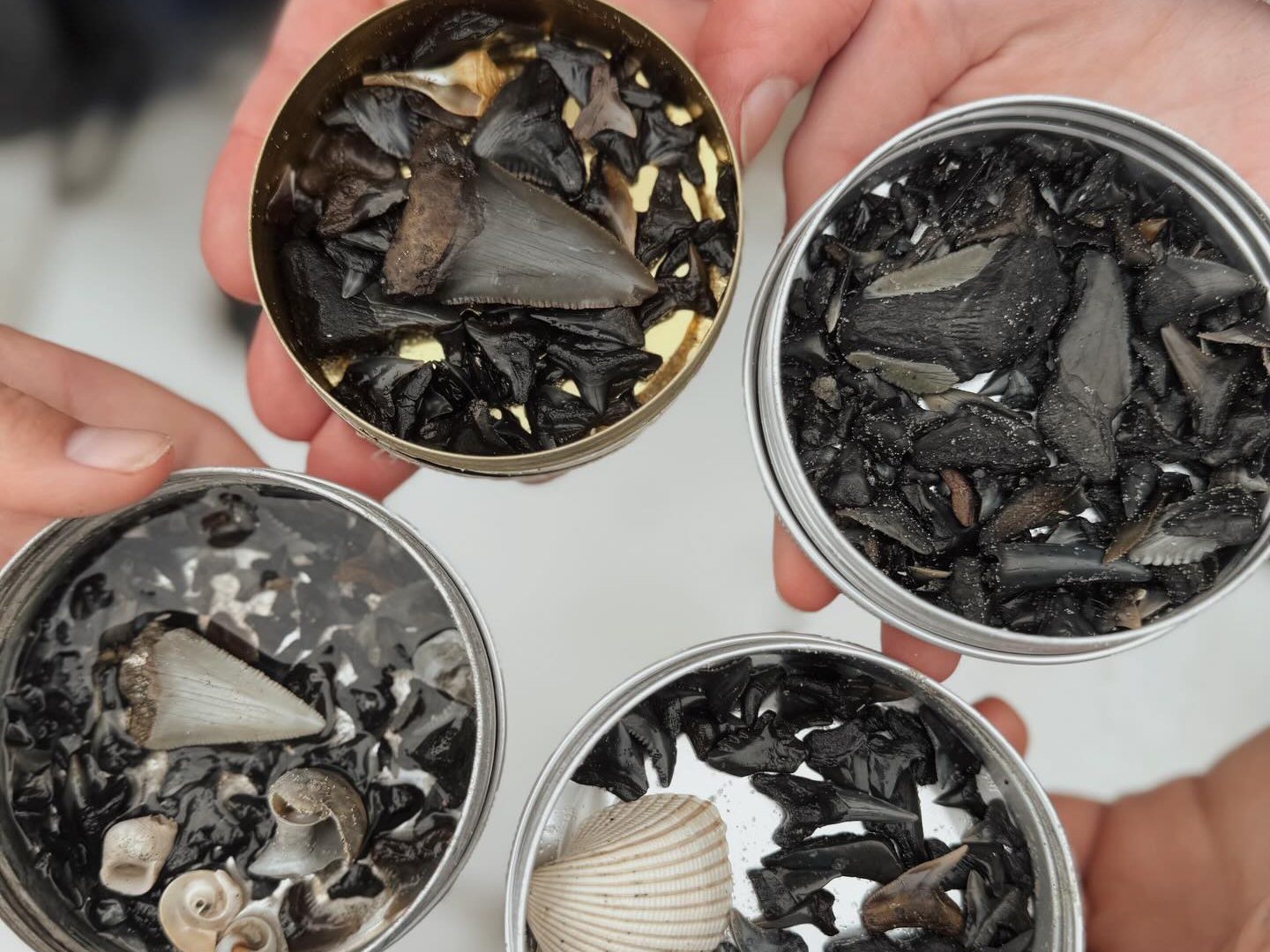
- A small tin or zip bag for your finds. Pockets full of shell hash are a laundry problem.
- Water, a snack, and a thermos of coffee for the ride back if you like.
- Dry socks waiting in the car.
All the hunting gear is provided. You don't need a sifter or a shovel. Your eyes do the work, and I'll show you what a fossil tooth looks like against the shell and gravel before everyone spreads out.
How we decide whether a trip runs
Weather is what people call about. This fall one guest phoned a week ahead of his shared Morris Island trip just to talk the forecast through with a person, and that's a good instinct.
So here is how it works. We go out in cold weather and we go out in light rain, since a little drizzle has never hurt a shark tooth hunt. When conditions on the water are unsafe, we cancel, and you choose between a full refund and a reschedule. If your own plans change, cancellation is free up to 24 hours before the trip. Trust the departure time on your confirmation, because we set it from the tide chart and it moves day to day.
Shared seats or a private boat
The shared Morris Island trip is four hours at $125 per person. Departure times follow the tide, so check the booking calendar for your date. Private boats are priced for the whole boat, and the per-guest step is small.
| Trip | Length | Price | Good winter fit for |
|---|---|---|---|
| Morris Island shared hunt | 4 hours | $125 per person | Couples and solo travelers who want the most beach time |
| Harbor Island Hopping & Shark Tooth Hunt (private) | 2 hours | from $375 for 1–4 guests | Families with small kids on a cold day |
| Shark Tooth & Sea Shell Hunt (private) | 3 hours | from $400 for 1–2 guests | Families who want the boat to themselves |
| Shark Tooth & Sea Shell Hunt (private) | 4 hours | from $500 for 1–2 guests | Hunters who want the best shot at a big tooth |
Private trips add $50 for each guest past the base count, up to 12. Bigger groups, up to 23, can take the 2-hour trip on our larger boat, the Roamer IV. A dedicated shark tooth guide is a $150 add-on on the 3- and 4-hour private trips. Fees and taxes of 3% are added at checkout.
In winter I steer families with young kids toward the 2-hour private trip. Kids are usually the best hunters on the boat because their eyes are closer to the sand, but a seven-year-old runs out of patience for wind well before the adults do. Two hours gets you a good stretch of beach and everyone back in the truck in a decent mood.
What turns up on the beach
Mostly fossil shark teeth between a quarter inch and an inch and a half long, colored black, gray or brown by the minerals that replaced the original tooth. Sand tiger, mako, lemon, bull and tiger shark teeth are the regulars, plus the serrated hemipristis everybody calls the snaggletooth. You'll also find shells, sand dollars and the odd piece of fossil bone. If you'd like help identifying shark teeth by species, bring them over to the crew on the beach and we'll sort them with you.
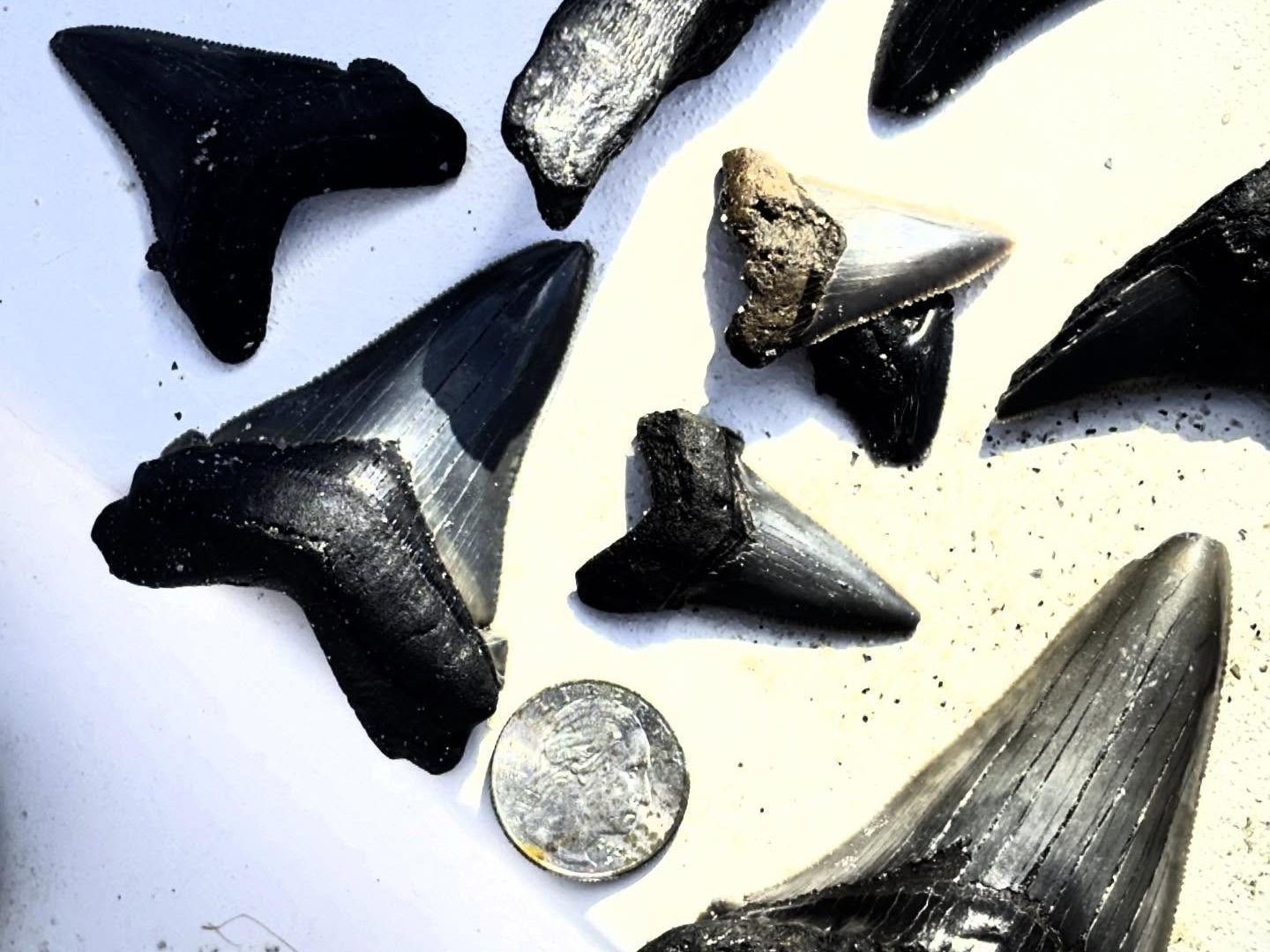
Megalodon teeth do wash up out here, and guests find them. Nobody can promise you one in any month. If a big tooth is the goal, book four hours so you have more time on the sand.
"Booked with Cpt Ricky and his 1st mate Bailey and was not disappointed. They were very knowledgeable and took time to show us real examples of what things we could find and where we should be looking."— Al T, TripAdvisor (“Found a massive Meg tooth”)
Keeping what you find
Everything you pick up on the beach goes home with you. Collecting from the exposed beach for personal use doesn't require a permit. The line is the mean low water mark: below it, including creek and river bottoms, South Carolina requires a Hobby License issued by the South Carolina Institute of Archaeology and Anthropology at the University of South Carolina, and even licensed collectors can only pick up by hand, with no digging or tools. We hunt the beach, so you won't need one.
Making a day of it
A fossil tour takes a good part of the day. The ride out crosses Charleston Harbor, where dolphins feed year-round and often surface near the boat. I can't promise them, but they show up on a lot of trips. The 1876 Morris Island Lighthouse stands just offshore while you hunt. The four-hour shared trip brings you back to Shem Creek four hours after you leave, about 14 minutes from downtown Charleston. If you want more time on the water while you're in town, our harbor cruise leaves from the same dock at 100 Church St in Mount Pleasant.
Book a winter fossil tour
Two or three people: take seats on the shared four-hour Morris Island trip. A family or group: book a private boat and pick the length that suits your day. Check open dates on the barrier island shark teeth trip page, or call us at (843) 874-8555 and we'll help you pick the right tide. Still comparing? Our rundown of fossil hunting boat tours out of Shem Creek lays out every trip side by side.
Pricing, BYOB rules, weather policy, and departure details are all on our FAQ page — or call (843) 874-8555.
Frequently Asked
Do Charleston fossil tours run in winter?
Yes. We run shark tooth and fossil trips from Shem Creek year-round, including December through February. Departures are timed to the low tide, so check the booking calendar for your date; we confirm the time when you book.
Is winter a good time to hunt shark teeth in Charleston?
It's one of our favorite stretches. The barrier island beaches see very few visitors, the low tides tend to run lower, and winter weather tends to bring fresh material onto the beach. No month guarantees a megalodon.
What should I wear on a winter shark tooth tour?
Layers with a windproof outer shell, a hat, thin gloves if you like, and waterproof boots or neoprene water shoes. Average highs in Charleston run about 58 to 61°F from December through February, and it feels colder on the moving boat.
What happens if the weather is bad?
We run in cold weather and light rain. If conditions are unsafe, we cancel and you choose a full refund or a reschedule. If you need to cancel, it's free up to 24 hours before the trip.
How much does a winter fossil tour cost?
$125 per person for the shared 4-hour Morris Island trip. Private boats start at $375 for 2 hours (1–4 guests), $400 for 3 hours and $500 for 4 hours (1–2 guests), plus $50 per extra guest, with 3% fees and taxes added at checkout.
Local captain with LowCountry Coastal Excursions, running tours out of Shem Creek since 2017.